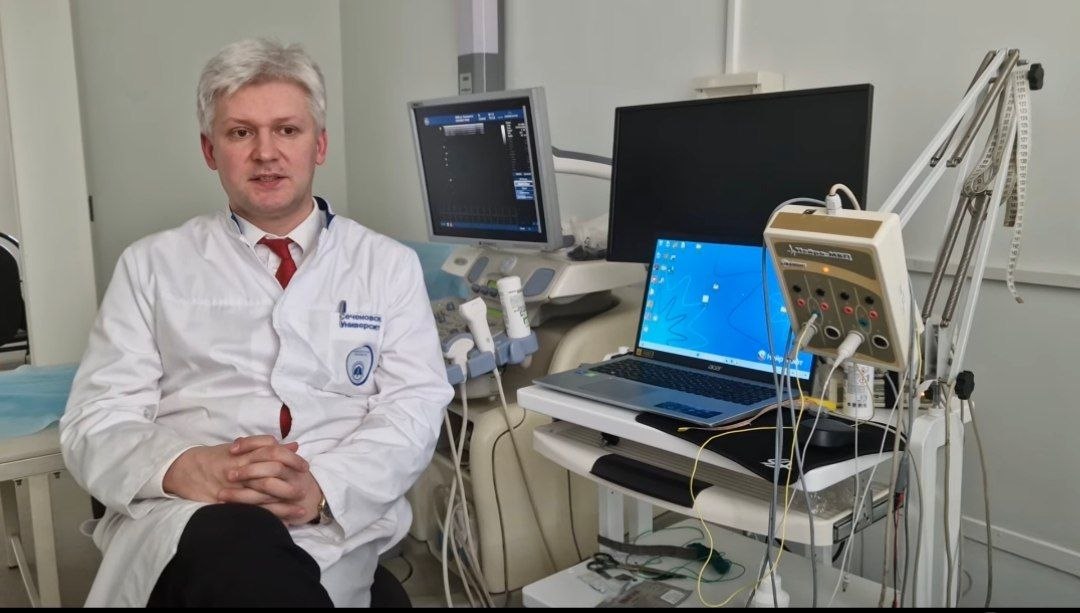
Neurologist, neurophysiologist, MD, PhD, prof. Druzhinin Dmitry Sergeevich

Дружинин Дмитрий Сергеевич

Doctor of Medical Sciences, Professor Dmitry S. Druzhinin

Sechenov University, Moscow.

Specialist in neuromuscular diseases and diagnostics of peripheral nerve disorders.

More than 20 years of clinical and research experience.

Author of more than 40 scientific publications.


Professional Activity

Currently works at Sechenov University (Moscow), where he is engaged in scientific and clinical work in the field of peripheral nervous system and neuromuscular diseases.

Previously worked as a neurologist and functional diagnostics specialist at the Department of Functional Diagnostics and the Neurology Department of the Railway Clinical Hospital at Yaroslavl station (Russian Railways), and also participated in the work of the Department of Nervous Diseases with a course in medical genetics and neurosurgery.


Research Activity

A significant part of his research is devoted to hereditary and dysimmune neuropathies, as well as structural changes of peripheral nerves.

In 2019 successfully defended doctoral dissertation.

Completed international training at the Santa-Maria Clinic (Lisbon, Portugal) and received training in peripheral nerve ultrasound techniques at the Vienna International Medical University under the supervision of Professor G. Bodner.

Active participant in international and national scientific conferences.


Digital Medical Projects

In addition to clinical and scientific work, he develops medical software solutions for patient monitoring and clinical data analysis.

One of the key projects is ALS Monitor — a digital system for monitoring the clinical condition of patients with amyotrophic lateral sclerosis (ALS).

The project aims to create modern digital tools for monitoring disease progression, supporting clinical decision-making, and advancing research in motor neuron diseases.
WORK ON THE STUDY OF PERIPHERAL NERVE DISEASES

Clinical practice: seeing patients with rare peripheral nerve diseases, training specialists in the field of neuromuscular pathology.

His particular interest lies in managing patients with motor neuron disease and polyneuropathy of various forms, as well as consulting on managing such patients.

Diagnostics of rare diseases of peripheral nerves: neoplasms of peripheral nerves of different origin, the phenomenon of focal constriction of the peripheral nerve, neuromuscular choristoma, traumatic neuroma, neurovascular conflicts, brain and limb arteries diseases, etc.

NOSOLOGY

Inflammatory myopathies

Multifocal motor neuropathy

Polyneuropathies associated with paraproteinemia

Miller-Fisher syndrome

Hereditary polyneuropathies (Charcot-Marie-Tooth disease)

Amyotrophic lateral sclerosis (various forms of motor neuron disease)

Spinal muscular amyotrophy

Hirayama Disease

Progressive muscular dystrophy

Facioscapulohumeral muscular dystrophy

Dystrophic myotonia of types 1 and 2

Myasthenia and myasthenic syndromes

Lambert-Eaton myasthenic syndrome

Congenital myasthenic syndromes

Tunnel neuropathies

Peripheral nerve and brachial plexus injuries

Obstetric brachial plexus injury

Inflammatory myopathies

Degenerative spine diseases – radicular compression conflicts

Acquired and congenital facial paralysis

Lower-extremity spastic paraplegia

Cerebral palsy

Congenital and acquired vascular diseases of the brain and spinal cord

Ordinary and associated migraine

Tension headaches

Cluster headache

Дружинин Дмитрий Сергеевич

CONSULTATIONS

Moscow, 11 Rossolemo St., bldg. 1, office 274


Training neurologists to work with neuromuscular patients: training them to test the main muscle groups, to conduct diagnostics – EMG, ultrasound of peripheral nerves, as well as semiotics of diseases of the neuromuscular system.

Giving lectures at the Department of Nervous Diseases, a course in genetics and pediatric neurology.

The website offers educational materials (lectures, articles) on the main areas of neuromuscular pathology.

“Correct and timely diagnostics of nervous system diseases is not only the basis of effective therapy, but it also opens the way to a deeper understanding of the physiology and pathophysiology of the nervous system.”
PhD, prof. Druzhinin D.S.